Equivariant ML for chemistry

Equivariant generative model that produces MD trajectories without an integrator
Given the last few frames, an E(3)-equivariant network (eSCN-style SO(2) convolutions with Wigner-D alignment, l_max = 2, causal attention over time) predicts the frame 50 fs ahead with a flow-matching head. On Lennard-Jones argon (256 atoms), 4 of 5 training seeds run 10⁴-step rollouts without crashing, and the best match OpenMM temperature, RDF, VACF and diffusion within v0 tolerances. Rollout speed is 25.8 ns/day on one A100. 
Rotation-aware optical chemical structure recognition
Turns a molecule drawing into SMILES with stereochemistry, and compares a standard CNN, a rotation-augmented CNN and a C8 steerable (rotation-equivariant) encoder under one shared decoder and evaluation protocol. Best result on 298 real images: 54.0% exact match (ACS 40%, UOB 84%, USPTO 37.8%) with an A + C ensemble and beam 5. Includes an interactive rotation lab. 
Language tokens that read 3D vectors and tensors directly
An Irreps-to-Text cross-attention layer: text tokens attend to SE(3)-equivariant atom features with invariant weights, so a question such as "what is the force on this oxygen?" returns a vector that rotates exactly with the molecule (error ~2e-6). On the TensorQA-v0 benchmark (84,757 questions on 20k QM9 molecules) it reaches force cosine 0.96, versus 0.11 when the question text is removed. Systems
VERDICT
Consensus optical chemical structure recognition, with a browser extension
Four independent recognizers — DECIMER, MolScribe, MolNexTR and a fine-tuned GLM-4.1V — vote by molecular identity (InChIKey), and the winner must still survive chemical parsing and an image round-trip. The answer is one canonical SMILES with a confidence tier, an explicit abstention path, and a per-engine audit trace. On ACS figures the quorum accepts 88.5% of crops at 86.2% precision. Molecule multimodal RAG
Retrieval across text, figures, and multi-scale simulation
A molecular knowledge graph in which depictions and simulations are first-class retrieval modalities, not just text. Literature text and figures are harvested and passed through OCSR, so every record carries a structure keyed on its parent InChIKey plus the DOI, figure and engine votes behind it. Retrieval mixes semantic search, structure similarity, exact-InChIKey lookup and structural search over DFT and MD records — which is what joins a molecule in a paper to the formulations it appears in. LLM and HPC agentic platform for quantum-chemistry workflows
Turns a natural-language request into production DFT calculations: an agent chain parses intent, proposes reaction hypotheses with RAG, builds structures, prepares VASP inputs, submits batch jobs to PBS/Slurm and analyses the results (adsorption and free energies). Bayesian optimisation of DFT parameters needs 73% fewer evaluations than a grid search. Multimodal agent for reasoning over scientific images
A ReAct agent that answers questions about spectra, XRD patterns, microscopy and molecule images by calling composable vision skills, returning structured data with per-skill confidence and a low-confidence flag. Includes a capability-audit benchmark and LoRA fine-tuning for Qwen-VL. Tools & experiments
Submit and monitor HPC jobs over SSH from one dashboard
Bookmark manager web app with a companion browser extension
Modular MCP agent with an arXiv paper-fetching tool
Publications
Papers & preprints
- Ag Amination
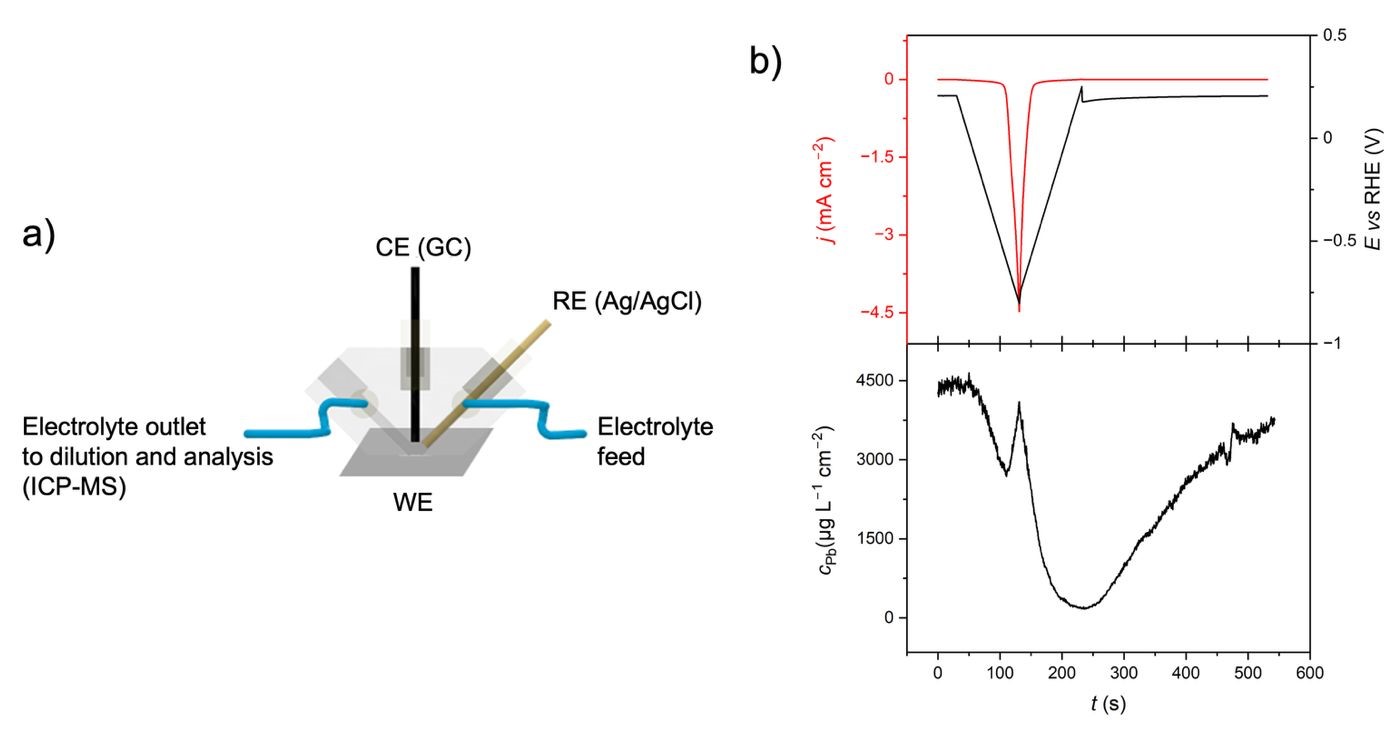 Electrochemical Amination of Acetone using Ag as Cathode: Mechanism and Role of Pb Impurities for Hydrogen TransferCatalysis Science & Technology, Sep 2026
- MU-PFF MD
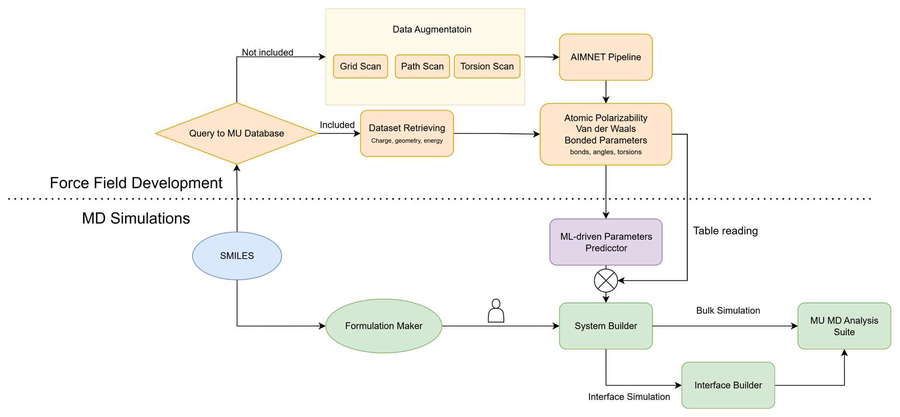 High-throughput Molecular Dynamics Simulation on an AI-powered PlatformChemRxiv preprint, Sep 2026MU-PFF: a machine-learned many-body polarizable force field plus automated system building and trajectory analysis, taking an electrolyte formulation from SMILES to predicted properties without manual parameterization.
- OCSR VLM
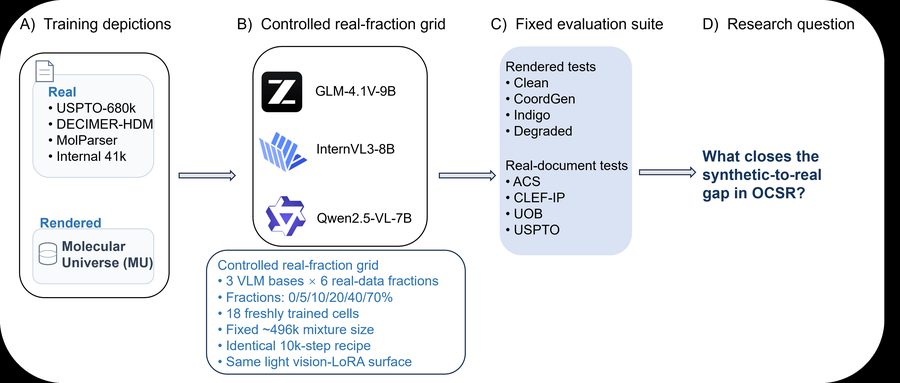
- VERDICTVERDICT: Agreement Beats Pixel-Space Verification in Real-Document OCSRarXiv preprint arXiv:2608.22183, Sep 2026Label-free verification for image-to-SMILES at scale: agreement among four architecturally distinct recognizers reaches AUROC 0.916, while re-rendering a prediction and comparing pixels barely beats chance at 0.547.
- EDLC
 Probing the Electric Double-Layer Capacitance to Understand the Reaction Environment in Conditions of Electrochemical Amination of AcetoneACS Applied Materials & Interfaces, Sep 2025
- DFT-KMCFirst-principles-based kinetic monte carlo model of hydrogen evolution reaction under realistic conditions: solvent, hydrogen coverage and electric field effectsACS Catalysis, Sep 2024
-
 Metallic Impurities in Electrolysis: Catalytic Effect of Pb Traces in Reductive Amination and Acetone ReductionAngewandte Chemie International Edition, Sep 2024
- Metallische Verunreinigungen in der Elektrolyse: Katalytische Wirkung von Pb-Spuren in der reduktiven Aminierung und AcetonreduktionAngewandte Chemie, Sep 2024German edition of the Angewandte Chemie International Edition article of the same title.
- Cu Dissolution
 Origin of copper dissolution under electrocatalytic reduction conditions involving aminesChemical Science, Sep 2024
- ML for Catalysis
 Machine learning in solid heterogeneous catalysis: Recent developments, challenges and perspectivesChemical Engineering Science, Sep 2022
- Li-S BatteryOrdered macroporous V-doped ZnO framework impregnated with microporous carbon nanocages as multifunctional sulfur reservoir in lithium-sulfur batteriesChemical Engineering Journal, Sep 2022
- A conductive and ordered macroporous structure design of titanium oxide-based catalytic cathode for lithium–sulfur batteriesNanotechnology, Sep 2021
- Zn-Air BatteryA macroporous titanium oxynitride-supported bifunctional oxygen electrocatalyst for zinc–air batteriesCatalysis Science & Technology, Sep 2021
- CO2 DFT
 Insights on the catalytic active site for CO2 reduction on copper-based catalyst: a DFT studyMolecular Catalysis, Sep 2021
- Nanoscale melamine-based porous organic frameworks as host material for efficient polysulfides chemisorption in lithium–sulfur batteriesNanotechnology, Sep 2020
- Bifunc. Catalyst
 Surface-engineered cobalt nitride composite as efficient bifunctional oxygen electrocatalystNanotechnology, Sep 2019
Conference
- Origin of Copper Dissolution in Electrocatalytic Reduction Conditions Involving AminesIn Electrochemical Society Meeting Abstracts prime2024, 2024
Thesis
- Modeling the Electrocatalytic Interface in the Conditions of Electrochemical Amination of Acetone with Methylamine as Nitrogen SourceUniversity of California, Los Angeles, 2024